
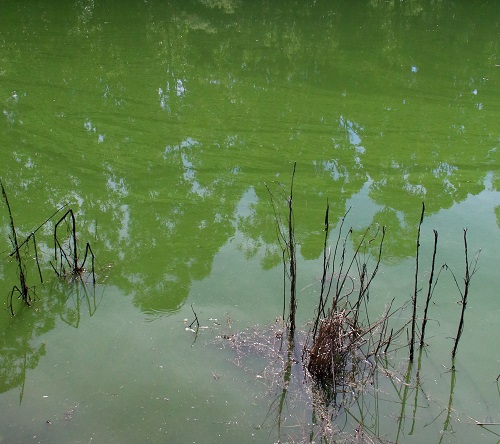
Why Blue-Green Algae Blooms Occur
Blue-green algae (cyanobacteria) blooms are not random events. They occur when excess nutrients, warm temperatures and poor biological balance allow these organisms to dominate.
In unmanaged or poorly balanced waterbodies, nutrients such as ammonia, nitrate and phosphate accumulate in the water column. Blue-green algae are highly efficient at exploiting these conditions, forming dense blooms that can persist for weeks or months.
Once established, blooms often become larger, more frequent and more toxic over time.
Why Blue-Green Algae Are a Serious Problem?
Blue-green algae blooms can:
- Produce toxins harmful to livestock, pets, wildlife and people
- Create surface scums and foul odours
- Reduce light penetration and water clarity
- Drive oxygen depletion, increasing the risk of fish kills
- Render water unsafe for stock, irrigation and recreation
Killing the bloom does not solve the underlying problem — and can make oxygen crashes worse.
Why Many Control Methods Fail
Common approaches to blue-green algae control focus on:
- Chemical algaecides
- Copper-based treatments
- Mechanical removal or flushing
- Aeration alone
While these methods may temporarily reduce visible algae, they:
- Do not remove the nutrient fuel driving blooms
- Often cause sudden oxygen depletion as algae die
- Require repeated applications
- Fail to restore biological balance
This is why blooms frequently return, often more aggressively.
A More Effective Strategy — Prevent Dominance
Long-term control of blue-green algae requires changing the biological conditions that allow them to dominate.
Healthy waterbodies regulate themselves through:
- Efficient nutrient uptake
- Stable oxygen cycling
- Strong competition from beneficial organisms
One of the most important competitors to blue-green algae are beneficial diatoms.
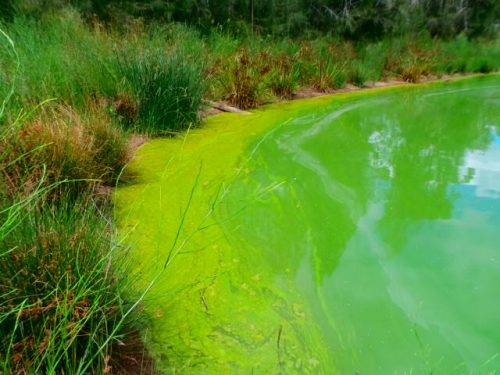
The Role of Diatoms in Suppressing Blooms
Diatoms are microscopic algae that:
- Absorb nitrogen and phosphorus efficiently
- Require silica and trace nutrients to grow
- Form the base of healthy aquatic food webs
- Support oxygen stability
When diatoms are supported, they:
- Reduce nutrient availability to blue-green algae
- Limit bloom intensity and duration
- Improve overall water resilience
In many affected waterbodies, diatoms are present but nutrient-limited, allowing blue-green algae to out-compete them.
How Diatomix Helps Eliminate Blue-Green Algae
Diatomix works by supporting beneficial diatoms rather than poisoning algae.
It:
- Supplies bioavailable silica and essential micronutrients
- Strengthens diatom growth and nutrient uptake
- Reduces the nutrient pressure that fuels blue-green blooms
- Improves oxygen balance and ecosystem stability
This approach reduces bloom frequency and severity by addressing the cause — not just the symptoms.
What Results to Expect
With appropriate application and management:
- Blue-green algae blooms become less frequent
- Blooms that do occur are smaller and shorter-lived
- Water clarity improves
- Oxygen levels become more stable
- Water becomes safer for stock, wildlife and people
Results depend on nutrient loads, water volume and environmental conditions.
Take the Next Step
If blue-green algae are affecting your waterbody:
👉 Learn how Diatomix works
👉 Find the right Diatomix product
👉 Contact us for tailored guidance